Showing posts with label 7th Chords. Show all posts

Voicing 7th Chords


 A little bird told me you wanted to learn voicing 7th chords. Thanks for your emails.

 Here is what I have learned from Noah Baerman on voicing 7th chords.

7th chords open up a whole new world of possibilities. It is funny to think that just
one extra note per chord can greatly alter the sound, but dealing with 7th chords does
just that. Voicing becomes much more important now that we are using 7th chords.
More notes create more voicing possibilities. As jazz keyboardists, we strive to learn
what those possibilities are, how to execute them and what impact each one may have
on the overall sound.

Voice Leading

Here are two examples of voicings for a ii-V-I in Bb Major.

1. C/ CEbGBb
  
    F/CEbFA

    Bb/BbDFA

2. C/CEbGBb

    F/FACEb

    Bb/BbDFA

The first example makes more sense. Each voicing flows smoothly to the next one,
and the hands have to move very little to play the progression. In the second example
the sound is broken up, and the right hand has to jump around to play the chords.
The difference is that the first example uses good voice leading. Voice leading is the
smooth movement of voices (notes) from one chord tot he next. If your hands are
jumping all over the place, you're probably not using good voice leading, and the
music is unlikely to sound smooth or cohesive. To voice lead well, your hands should
use the least possible amount of energy. Imagine that, the easier it is to play, the better it sounds!

3. Example of a iii-vi-ii-V-I progression in F Major with good voice leading.

A/GACE (Amin7)

D/FACD (Dmin7)

G/GABbD (Gmin7)

C/GBbCE (C7)

F/FACE (FMaj7)

Each of the four voices in the right hand moves very little as the chords change.
Just like the individual singers in a choir, who can't jump around too much without 
getting tired and confused, the voices in a chord should avoid leaps whenever possible.
The bass notes move around more but that's inevitable when the roots are moving in large
intervals like 4ths and 5ths. Since the left hand is playing one note at a time, it is not
difficult to play.

We have more freedom with voicing when the left hand plays the roots. So far, we've
been playing four notes at a time in the right hand whenever we play 7th chords.
Now that we're getting  the hang of them, we can eliminate one of those notes.


4. The right hand can play the 3rd, 5th, and 7th of each chord. The left hand can take 
care of the roots.

D/FAC (Dmin7)

G/DFB (G7)

C/EGB

With this kind of voicing, the sound becomes more open. We don't lose the fullness
because all four notes of each chord are still being played. WE still use the same method
of voice leading, simply omitting the root from the right hand. Let's take the following
progression in B minor.

5. Roots in l.h. and 3rds, 5ths and 7ths  in r.h. with smooth voice leading.

B/ADF# (Bmin7)

E/BDG (Emin7)

B/ADF# (Bmin7)

G/BDF# (GMaj7)

C#/GBE (C#min7b5)

F#/A#C#E (F#7)

B/ADF# (Bmin7)

If we begin the progression with a different voicing for the first Bmin7 chord,
then the voice leading will naturally lead to other voicings for the rest of the chords,
since other voicings will be within easier reach.

6. Here's another way of voicing the same changes with the same technique.

B/DF#A (Bmin7)

E/DGB (Emin7)

B/DF#A (Bmin7)

G/DF#B (GMaj7)

C#/EGB (C#min7b5)

F#/C#EA# (F#7)

B/DF#A (Bmin7)


Hope these are helpful examples. You may want to visit these resources.

Advanced Gospel Courses

Gospel Core Essentials


Be sure and sign up for my free newsletter.

All the best,


"The beautiful thing about learning is that no one can take it away from you." B.B.King
Enhanced by Zemanta

Souled Out by Hezekiah Walker

You see, I can't get this song out of my mind and heart, the #1 song, because I'm Souled Out! Recorded live at the Love Fellowship Tabernacle in Bensalem, PA, Souled Out is a classic Hezekiah Walker & LFC recording full of energy and praise.
* Hezekiah Walker- Souled Out {LIVE}


* Hezekiah Walker & The Love Fellowship Crusade Choir bring you to your feet with the title track from their latest release. Fun with a punch - that's "Souled Out." Purchase download

http://christianmusic.about.com/od/top10fromyourguide/tp/tp020909.htm

* Black Gospel Song "Souled Out" is the #1 Played Song on Radio This Week
One of the top gospel songs for this week according to Radio and Records is Hezekiah Walker's Souled Out.


http://www.1800gospel.com/2009/04/gospel-music-news-hezekiah-walker-yolanda-adams-gloria-gaynor


* The lead single from Hezekiah Walker's album entitled Souled Out was released November 4, 2008... listen to the CD here:

http://new.music.yahoo.com/hezekiah-walker

* (P.1) Souled Out - Hezekiah Walker by jessroy2004
SIMPLIFIED Chord Breakdown for Piano
-(Please search for more advanced tutorials if needed, and keep in mind that these are severely simplified tutorials)

* (P.2) Souled Out - Hezekiah Walker

* Souled Out Piano Tutorial Gospel Music Download
You can buy a download of this tutorial from Payloadz for $4.95 at

http://store.payloadz.com/str-asp-i.199591-n.Souled_Out__Piano__Tutorial_Music_Gospel-
end-detail.html

* Hezekiah Walker Souled Out Lyrics

http://www.sweetlyrics.com/659725.Hezekiah%20Walker%20-%20Souled%20Out.html

I am souled out, my mind is made up (x4)
Who can separate us from the love Jesus
Not death, nor life
Jesus paid the price, now I'm free from sin
I am souled out, my mind is made up (x2)
I've come through the fire, I've come through the rain
But God, He never left my side
He's my comfort through all hurt and pain
I am souled out (x 6)
[invert harmony up]
I am souled out (x 6)
My heart is fixed, my mind's made up
No room, no vacancies, I'm all filled up
His Spirit lives in me
- and that's the reason - I'm Souled Out!
Yes
My heart is fixed, my mind's made up
No room, no vacancies, I'm all filled up
His Spirit lives in me
- and that's the reason - I'm Souled Out!
Yes, Yes, Yes, Yes
Yes, Yes, Yes, Yes
My heart is fixed, my mind's made up
No room, no vacancies, I'm all filled up
His Spirit lives in me
- and that's the reason - I'm Souled Out!
* Other Related Piano tutorials to Souled Out

http://www.youtube.com/watch?v=k9-pztthnBsE

Very Impressive! (Jmartime)

http://www.youtube.com/watch?v=iIwmCjJ5_R4

Key of F (iDissectMusic)

http://www.youtube.com/watch?v=-z2hCgkmSig

Sam's Gospel Music Workshop " Souled Out"

http://www.youtube.com/watch?v=wOLjKnU9GgQ

Piano Tutorial - Souled Out - Hezekiah Walker (StarlingSounds)

http://www.youtube.com/watch?v=Mafjs8YFm0E

Have fun learning the song and playing Souled Out, full of energy and praise!
All the best,
~ LadyD

Enter your email address:


Delivered by FeedBurner


Enhanced by Zemanta

Slash Chords


What are slash chords?

* Here's my definition of a slash chord:
Giving you an alternative bass note, we say A over E, for example. The chord looks like this: A/E So, play A in the r.h. and E in the l.h.

* Here's an online definition of slash chords at

http://en.wikipedia.org/wiki/Slash_chord

"In popular music a slash chord or slashed chord is a chord whose bass note or inversion is indicated by the addition of a slash and the letter of the bass after the root note letter"...

* Piano Chord Symbols: Slash Chords by Duane Shinn
Great video showing you what slash chords are all about


* Use Slash Chords, Diminished Sound in Gospel Music
Play:

C/ C E G
B/ B E G#
A/ C E A
F#/ A D F#
G/ B D G

* LGM Definition of Slash Chord
A slash chord is nothing more than a chord with an alternate bass note.
They're also called compound chords.

When you see a chord like A/E, the first character is the chord and the second character after the slash is the bass note, so A/E would be an A chord with an E bass note instead of an A bass note.

Some of the most common types of slash chords are inversion based, meaning that one of the notes already in the chord triad are used for the bass note.
G/B, D/F#, A/C#, A/E...all are inversions of the chord but using either the 3rd note of the 5th note as the bass note instead of the root note.

Some slash chords are non-inversion based, like B/E. The B triad is B, D#, F#...there's no E there BUT if you add extensions to the triad to make, say, a BMaj9/E, then you've got B, D# and F# as well as C# and E so BMaj9/E becomes inversion based.

http://www.learngospelmusic.com/forums/index.php/topic,51740.0


So, C/G means play G chord with your left hand and a C chord with your right.

* Chord Charts At LGM

Slash chord chart #1:

http://www.learngospelmusic.com/forums/index.php/topic,55476.0.html


Slash chord chart #2:

http://www.learngospelmusic.com/forums/index.php/topic,55491.0.html


Slash chord chart #3
:

http://www.learngospelmusic.com/forums/index.php/topic,55694.0.html


http://www.learngospelmusic.com/forums/index.php/topic,55603.0.html


slash chords


http://www.ibreathemusic.com/cat/3


http://www.learngospelmusic.com/forums/index.php/topic,52634.0.html


* Duane has an Ebook on Power Chords

http://www.ebookexplorer.com/book_1971.html


* FOUR PART CHORDS OVER ROOT - Chord Voicings

REMEMBER: for these chords you'll want to play a 4-note chord in your RH over your root in the LH. Also you can invert that chord in your RH to any inversion you'd like unless otherwise noted.

Em7 / C = Cmaj9 spelled out.. C/EGBD
note: another way to think about this one is to play a minor 7th chord off of the 3rd in your RH and the root in your LH

Ebmaj7 / C = Cm9 spelled out.. C/EbGBbD
note: another way to think about this one is to play a major 7th chord off the minor 3rd in your RH and the root in your LH

Bm7b5 / G = G9 spelled out.. G/BDFA
note: another way to think about this one is to play a minor 7 flat 5 chord off the 3rd in your RH and the root in your LH

Fmaj7b5 / G = G13 spelled out.. G/FABE
note: another way to think about this one is to play a major 7 flat 5 chord off the flat 7 in your RH and the root in your LH
note: only root and 2nd inversion should be used on the chord in the RH

Dm7 / G = G9sus4 or G11 <-- this is a HOT chord that I use all the time I substitute the 3 chord in a 3-6-2 progression for this sus chord (I'll post this later)
note: another way to think about this one is to play a minor 7th chord off the 5th in your RH and the root in your LH
note: spelled out.. G/DFAC

Fmaj7 / G = G13sus4 <-- Another HOT chord I use a lot too. I substitute the 5 chord in a 2-5-1 progression for this sus chord
note: another way to think about this one is to play a major 7th chord off the flat 7 in your RH and the root in your LH
note: spelled out.. G/FACE

Fm7b5 / G = G7 (b9 #5)
note: another way to think about this one is to play a minor 7 flat 5 chord off the flat 7 in your RH and the root in your LH
note: spelled out.. G/FAbBEb

Bmaj7b5 / G = G7 (#9 #5)
note: another way to think about this one is to play a major 7 flat 5 chord off the 3rd in your RH and the root in your LH
note: only root position should be used on the chord in the RH
note: spelled out.. G/BD#FA# or G/BEbFBb (the first way is the best way to look at it b/c you can see that the 9 and 5 are sharped)

Fmaj7#5 / G = G13 (#11)
note: another way to think about this one is to play a major 7 sharp 5 chord off the flat 7 in your RH and the root in your LH
note: only root position should be used on the chord in the RH
note: spelled out.. G/FAC#E

http://www.learngospelmusic.com/forums/index.php/topic,55491.0.html


* Final Note

I have found that most people who chord songs in the LH/RH format do so because they play by ear. Many folks want to read sheet music and read chord symbols. It's great to have the chords written out for voicing purposes. Using chord symbols for posting chords is easier, but many want chords written out so that they can understand. Learning alternative bass notes will add so much more to your playing. When I first started playing the piano and soloing, I used sheet music. When I came aboard worship teams and gained experience playing with a bass player, I learned to read chord charts and gladly welcomed slash chords, so as not to step on the bass players toes! lol

All the best,

~ LadyD


Can You Harmonize The Melody?

Can you accompany "one-fingered" melodies with full sounding chords? Sure ... it's easy to play a one-fingered melody like "Mary Had a Little Lamb, but the hardest part is finding the right chords to accompany your melody.

To HARMONIZE a melody means to create a chord accompaniment for it. Since the I, IV & V chords contain all the notes of the major scale, many melodies in a major key can be harmonized with just these three chords.

To harmonize a melody with chords, there are 7 basic triad (3 note) chords one can use in a major key: I major, ii minor, iii minor, IV major, V major, vi minor, and vii diminished. In the key of C, these chords would be:

C major = C-E-G
D minor = D-F-A
E minor = E-G-B
F major = F-A-C
G major = G-B-D
A minor = A-C-E
B diminished= B-D-F

To determine the chords to be used, analyze the melody notes. Refer to the following chart to see which chord is generally used with each melody note of a major scale. When more than one chord can be chosen, your EAR should always be the final guide.

When melody note is: Simply play this chord:
C E + G + C (played all at the same time)
D F + A + D
E G + C + E
F A + C + F
G C + E + G
A C + F + A
B D + G + B
C E + G + C


Example: Mary had a little lamb


E D C D E E E (Ma-ry had a lit-tle lamb)

G+C+E (Ma)

F+A+D (ry)

E+G+C (had)

F+A+D (a)

G+C+E (lit)

G+C+E (tle)

G+C+E (lamb)

Notice that the original melody note is still on top! The song still sounds like "Mary had a little lamb", the melody is still obvious, but with the addition of full-sounding harmony!

Use this same harmonization scale technique in every key. The chord notes can also be used to harmonize a choir.

You now have a formula:

A) Determine a melody to any song

B) Replace the melody notes with harmonizing chords making sure to keep the melody note as the highest tone of each chord (see chart above)

C) Add bass (or left hand)

http://www.LadyDpiano.com


Bookmark and Share


Enhanced by Zemanta

Playing Chord Patterns


I - IV - V - I Chord Pattern

Examples:
Key of C: C - F - G - C
Key of D: D - G - A - D
Key of E : E - A - B - E

I - iii - IV - ii - I Chord Pattern

Examples:
Key of F: F - A - Bb - G - F
Key of G: G - B - C - A - G
Key of A: A - C# - D - B - A

I - vi - ii - V - I Chord Pattern

Examples:
Key of B: B - G# - C# - F# - B
Key of Db: Db - Bb - Eb - Ab - Db
Key of Eb: Eb - C - F - Bb - Eb
Key of Gb: Gb - Eb - Ab - Db - Gb

I - ii - iii - IV - V - I Chord Pattern

Examples:
Key of Ab: Ab - Bbm - Cm - Db - Eb - Ab
Key of Bb: Bb - Cm - Dm - Eb - F - Bb

I - vi - ii - IV - I Chord Pattern

Examples:
Key of C: C - Am - Dm - G - C
Key of D: D - Bm - Em - A - D

http://www.LadyDpiano.com


Bookmark and Share

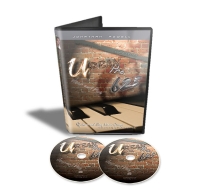
UrbanPro 625


"Play Better Than You've Ever Played Before In
Half The Time
With These
57
Phat-Sounding
, Contemporary Worship Chords!"


***Crucial Piano
Report***


For
the first time ever, piano expert, Jonathan
Powell sits down in the studio and records
everything he knows about playing
contemporary, urban-styled gospel music by
ear!


The image “https://secure.hearandplay.com/images/urban625small.jpg” cannot be displayed, because it contains errors.


Once again, you can expect not only to hear
super phat chords and full-sounding
progressions in this
2-hour audio course
,
but he really takes his time and breaks
everything down... STEP-BY-STEP and in an
instructional format!


The Hear and Play Music

philosophy is to "teach
," first
and foremost before anything else. They can't stand those courses that are just "CONCERTS"
and a way for musicians to show off. While
they are surely inspirational, they often
times lack substance.


Not here!


With that said... you get the best of all
worlds. The "how," the "when," and the
"why."


In
this revolutionary course you'll...


  • Learns the
    secret about major scales

    that most top musicians use
    in their urban gospel
    playing but never want to
    talk about.


  • Understand
    the underlying similarities
    and differences

    between the 3 most popular
    types of seventh chords used
    in urban playing and how to
    place them in a way you'd
    never imagine!


  • "Individualize" your style
    and set yourself apart


    from the pack by utilizing
    tons of extended chords and
    two-hand voicings that are
    only known by a few (he's
    risking his reputation by
    giving away these secrets).


  • Learn the
    secrets to building fancy
    minor seventh chords

    for use in contemporary
    worship settings (....this
    is extremely important and
    will have you sounding
    several times better the
    minute you implement them).


  • Find out the
    secrets to the "7th tone"

    and when to lower it.
    Between the 3rd and 7th
    tones of your chords lie
    many secrets that allow you
    to instantly manipulate
    almost any chord to produce
    the sound you want!


  • ...And so much more!


Click Hear To Learn More


http://www.LadyDpiano.com
Related Posts Plugin for WordPress, Blogger...

© copyright 2008-2020 – All rights reserved

LadyD Piano
Related Posts with Thumbnails