

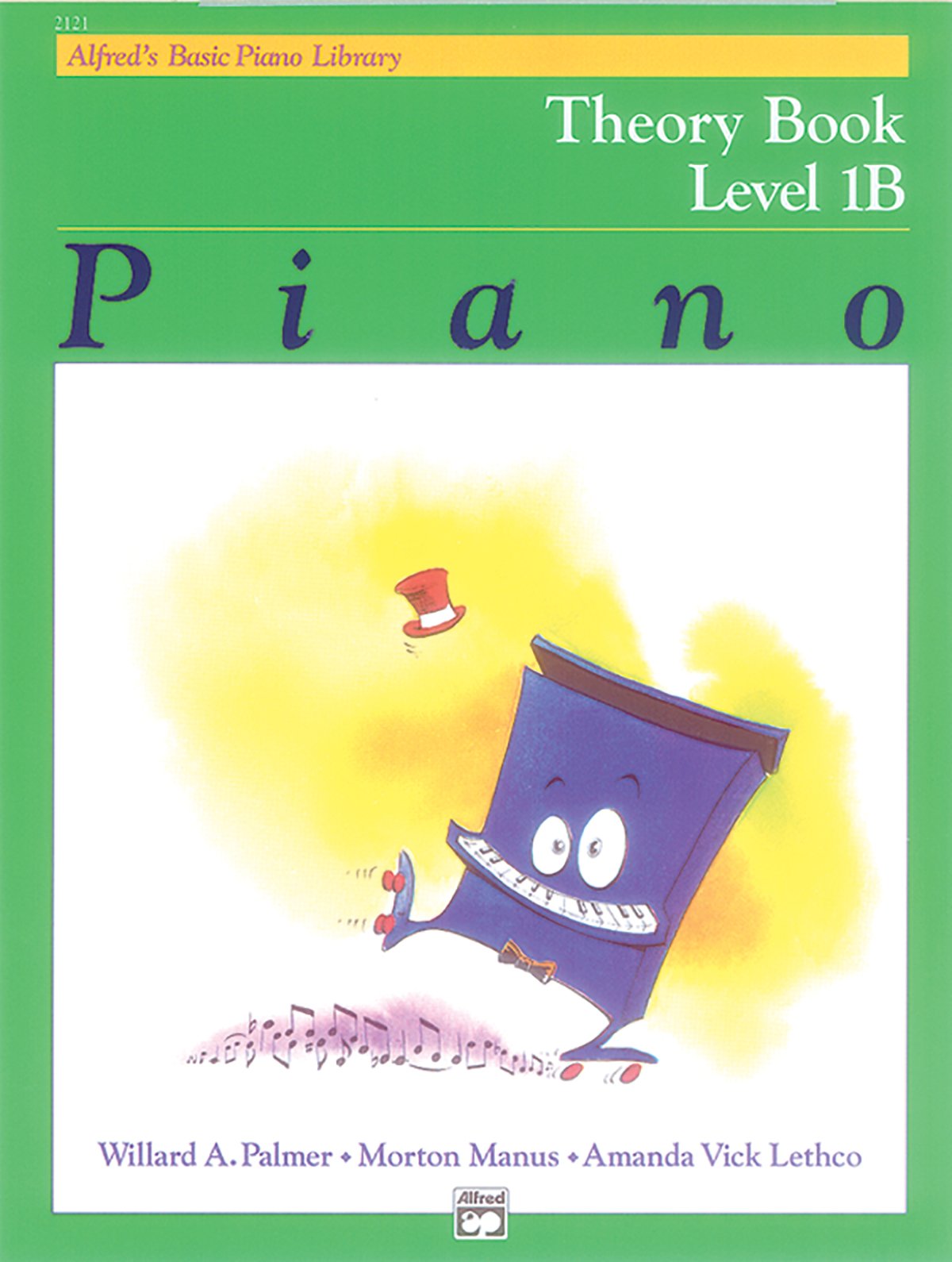
Once my students complete Level 1 piano lessons, they continue on with Alfred's Basic Piano Library Lesson Book: Level 2
 . In case you missed the first post of Level 1 overview, you can find it here. Basically, the goal is for students to learn measures, bar lines and counting. Reviewing high and low notes with groups of 2 black keys. Learning that neighboring fingers play neighboring keys is essential, along with feeling the pulse on half notes with steady rhythm. Basically, we cover five finger patterns, a few major keys, many basic chords and some students learn chord progressions!
On to the next level... Level 2! By the end of the school year, children will perform a memorized solo and another contrasting style piece. They are able to understand more music symbols and vocabulary at this level. Moving on...

ShowTime Piano Jazz & Blues: Level 2A - Elementary Playing

Functional Skills
A. Rhythm and Pulse Development: count aloud the rhythm of the quarter, half and whole notes and corresponding rests, and dotted half notes with metronome at 72.
B. Sight Playing: 4-8 measure piece in 5 finger position.
C. Keyboard Facility: Prepare 5 pentascales or one octave scale (major or minor, hands separate and together). Keys: C, D, E, F, G. Play a triad in each key. Know Cm, Fm, Gm, Dm, Am and Em. To form a minor chord, lower the middle note of a Major chord one half step.
D. Applied Theory: Be able to play for the teacher, intervals of 2nd - 5ths on white keys, up and down. Sharped and flatted notes. The goal here is to play Melodic and Harmonic Intervals. An important concept here is that playing harmonic intervals should be softer than the melody. The melody should be clearly heard. Know chord inversions, too.
E. Written Theory: Be able to write about
* Number of beats for quarter, half, whole notes and rests and dotted half notes.
* Counting in 2/4, 3/4 and 4/4 meter.
* Drawing sharp, flat and natural symbols; recognizing forte, piano, staccato and legato.
* White and black key names on keyboard.
* 2nd - 5th intervlas pictured on keyboard and staff, white keys only.
* Names of the notes on the grand staff from first line bass G to fifth line treble F.
I wanted to make a note here that many students learn V7 chords, Augmented and Diminished Chords at Level 2. I've written several posts, Augmented and Diminished Chords and Augmented Chords: When and Where To Use Them.
I wanted to make a note here that many students learn V7 chords, Augmented and Diminished Chords at Level 2. I've written several posts, Augmented and Diminished Chords and Augmented Chords: When and Where To Use Them.
F. Listening: Able to answer questions verbally
* Forte, piano, legato or staccato sounds. (understanding dynamic levels).
* Direction of 5 notes (up, down or repeating).
* Identifying steps and skips played for you.
* The beat of a song (by clapping along).
* Which one of two descriptions matches a piece played for you.
It is important for students to understand and observe staccato articulation. Phrasing and dynamic shading is necessary. Students employ a "down-up" wrist movement. Plus, knowing how to play Allegro and Allegretto. Technical training is more important than just working at scales and finger exercises. It should include practice for pianissimo and fortissimo, crescendo and diminuendo. Here are a few terms taken from Level 2...
Music Dictionary
accent - play this note louder
eighth rest - one-half beat of silence
fermata - hold this note longer than usual
flat - lower the note a half step (the nearest key to the left)
half rest - two beats of silence
natural - no sharp or flat, just the letter name (a white key)
ottava - play one octave higher than written
pick up note (upbeat) - an incomplete measure. A pick up note leads to the first full measure. Often the last measure will also be incomplete. Then, the combined value of the first and last measure equals one complete measure.
quarter rest - one beat of silence
ritardando - gradually slow down
sharp - raise the note a half step (nearest key to the right)
slur - musical phrase, idea with connected notes
staccato - lift quickly; short and bouncy
tempo - the speed of the music
tie - curved line connecting the same notes, hold for the combined value of both notes
time signature - two numbers at the beginning of a piece (one above the other); top number indicates the number of beats per measure, while the bottom number indicates the note receiving the beat
triplet - 3 eighth notes to a quarter note
1st and 2nd endings - play the 1st ending and take the repeat; play 2nd ending, skipping over the 1st ending
pedal marking - depress the damper pedal (right foot pedal) after you play the note or chord; release at the end of the pedal mark
pedal change - Lift the pedal on the beat and depress immediately after
repeat signs - Play the section within the repeat signs again
whole rest - a whole measure of silence
Be sure and check out Jermaine Griggs Home Study Course. It's a great theory workbook filled with lots of core music concepts and it's about 300 pages. The big workbook covers many music principles that you need to know for a good foundation in understanding music. Playing all kinds of chords in songs is so important, too. Another approach to learning is hearing these audio cds, Chords 101 & 102
*affiliate links in post*
All the best,
Music Dictionary
accent - play this note louder
eighth rest - one-half beat of silence
fermata - hold this note longer than usual
flat - lower the note a half step (the nearest key to the left)
half rest - two beats of silence
natural - no sharp or flat, just the letter name (a white key)
ottava - play one octave higher than written
pick up note (upbeat) - an incomplete measure. A pick up note leads to the first full measure. Often the last measure will also be incomplete. Then, the combined value of the first and last measure equals one complete measure.
quarter rest - one beat of silence
ritardando - gradually slow down
sharp - raise the note a half step (nearest key to the right)
slur - musical phrase, idea with connected notes
staccato - lift quickly; short and bouncy
tempo - the speed of the music
tie - curved line connecting the same notes, hold for the combined value of both notes
time signature - two numbers at the beginning of a piece (one above the other); top number indicates the number of beats per measure, while the bottom number indicates the note receiving the beat
triplet - 3 eighth notes to a quarter note
1st and 2nd endings - play the 1st ending and take the repeat; play 2nd ending, skipping over the 1st ending
pedal marking - depress the damper pedal (right foot pedal) after you play the note or chord; release at the end of the pedal mark
pedal change - Lift the pedal on the beat and depress immediately after
repeat signs - Play the section within the repeat signs again
whole rest - a whole measure of silence
Be sure and check out Jermaine Griggs Home Study Course. It's a great theory workbook filled with lots of core music concepts and it's about 300 pages. The big workbook covers many music principles that you need to know for a good foundation in understanding music. Playing all kinds of chords in songs is so important, too. Another approach to learning is hearing these audio cds, Chords 101 & 102
*affiliate links in post*
All the best,

"The beautiful thing about learning is that no one can take it away from you." B.B.King




![[Valid Atom 1.0]](valid-atom.png "Validate my Atom 1.0 feed")


